Capoeira is an Afro-Brazilian art that brings together movement, music, play and ritual.
The Martial Art
Capoeira is a conversation in movement. Two players exchange kicks, evasions and flowing steps inside the roda, a circle formed by the people playing music, singing and watching.
Three broad traditions help describe its many approaches:
Angola
Closely associated with Mestre Pastinha, Angola places particular emphasis on ritual, strategy and dialogue between players. Games often move close to the ground, but their pace and character can vary.
Regional
Mestre Bimba developed Regional as a structured approach to teaching capoeira. Training sequences, precise movements and dynamic exchanges are among its characteristic features.
Contemporânea
Contemporary approaches draw on different capoeira traditions. Movements, rhythms and teaching methods vary between schools, reflecting an art that continues to develop.
The Music
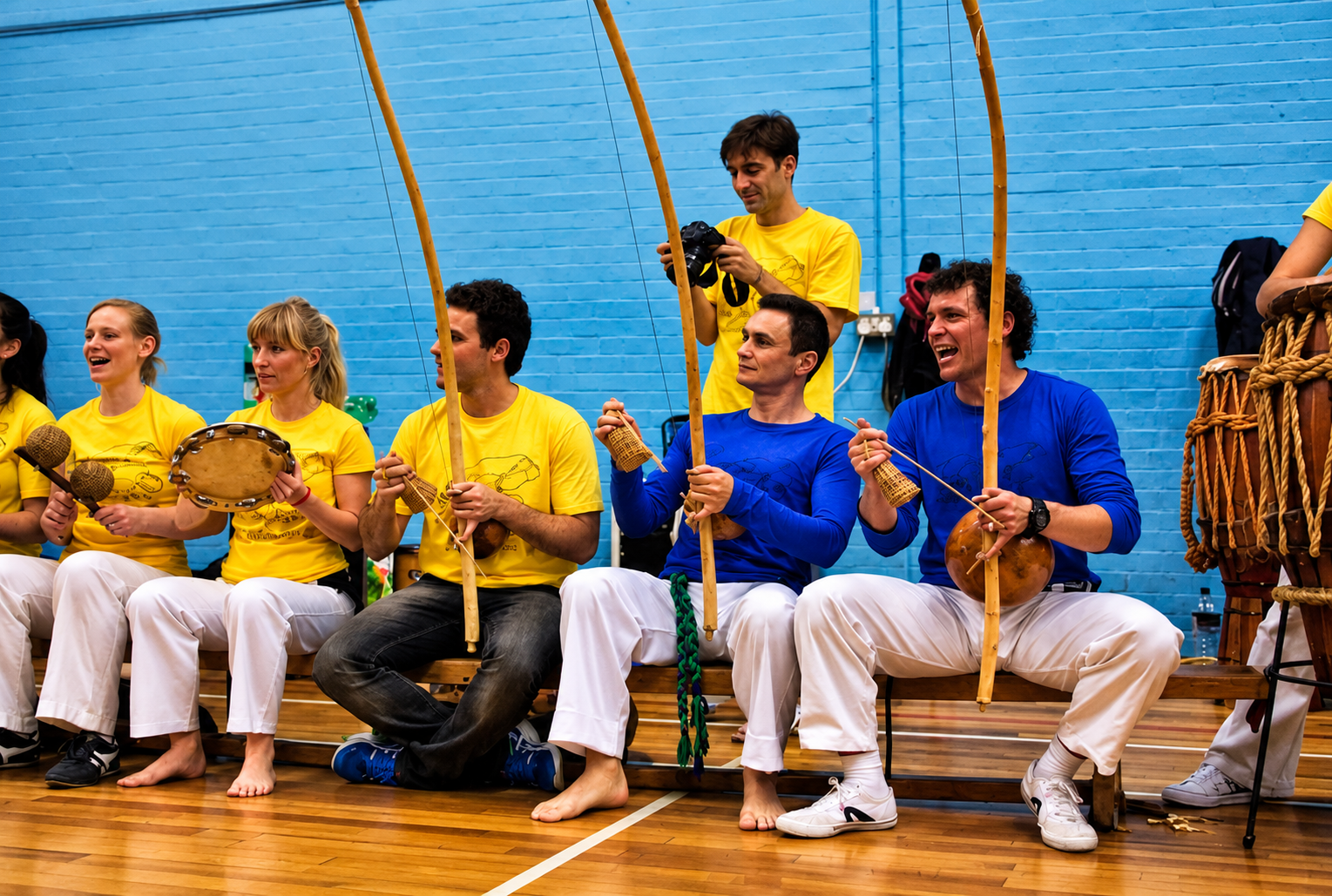
Music gives the roda its rhythm and energy. The toque, or rhythm, of the berimbau helps guide the pace and character of the game, while singing and clapping connect the whole circle.
The bateria, the group of musicians, may include:
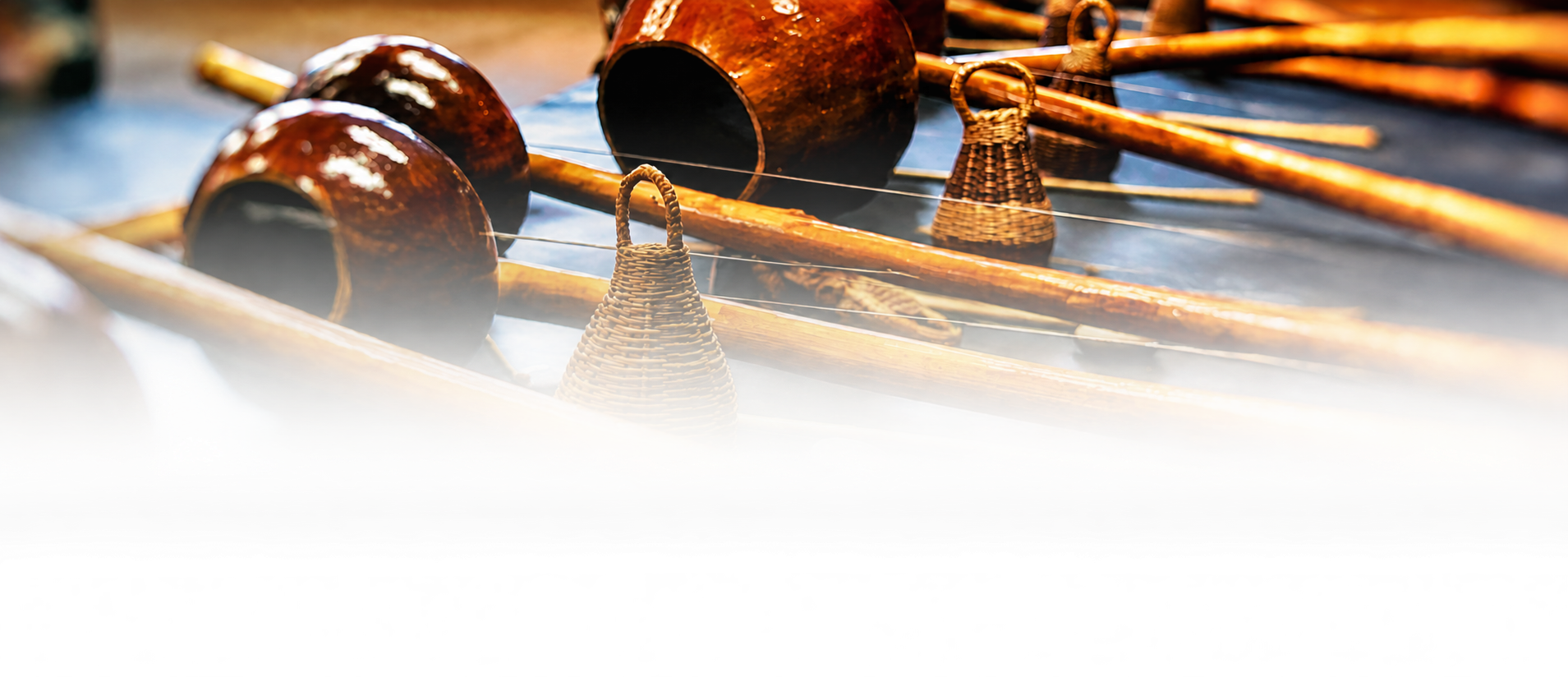
- Berimbau — a single-string musical bow with a gourd resonator.
- Pandeiro — a hand-held frame drum with jingles.
- Atabaque — a tall wooden drum.
- Agogô and reco-reco — a bell and a scraped percussion instrument.
The combination of instruments depends on the tradition and the roda.
Songs carry stories, memories and lessons. Many use call and response, inviting everyone to join in. Forms include the ladainha, a solo opening song; chula, a lead-and-response passage; corrido, with recurring chorus responses; and quadra, built around a four-line verse.
Listening, singing and learning the instruments are part of discovering capoeira, alongside its physical movements.
A Brief History
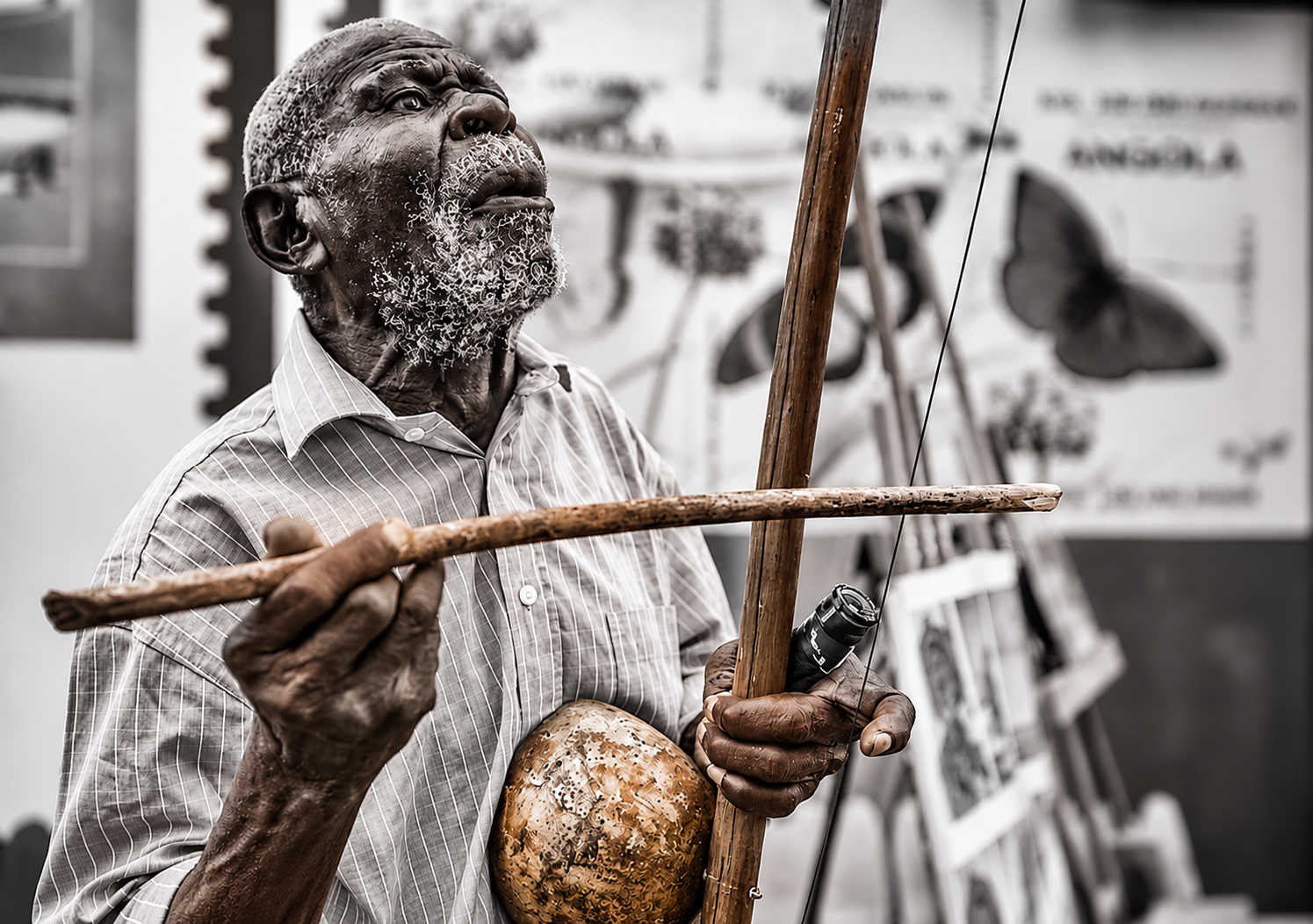
Capoeira developed in Brazil among enslaved Africans and their descendants. Its movement, music and rituals carry African cultural heritage, shaped by the experiences of communities in Brazil.
Much of its early history was passed on through oral traditions. Its precise origins remain debated; familiar stories about capoeira should not all be read as settled historical fact.
Through slavery and the years that followed, capoeira became a means of expression, resistance and belonging. Abolition in 1888 did not end the exclusion faced by Afro-Brazilian communities, and capoeira itself was criminalised in 1890.
During the twentieth century, teachers including Mestre Bimba and Mestre Pastinha helped establish schools and pass on distinct traditions. Capoeira gradually gained wider recognition in Brazil and spread internationally.
Today, the roda brings people together across the world. In Cardiff, learning capoeira offers a way to engage with this living Afro-Brazilian tradition through movement, music and shared practice.
Related Arts
Capoeira shares musical and cultural connections with other Afro-Brazilian traditions.
Samba de roda
A tradition of music and dance in a circle, especially associated with Bahia. Singing, clapping and percussion support dancers who take turns entering the circle.
Maculelê
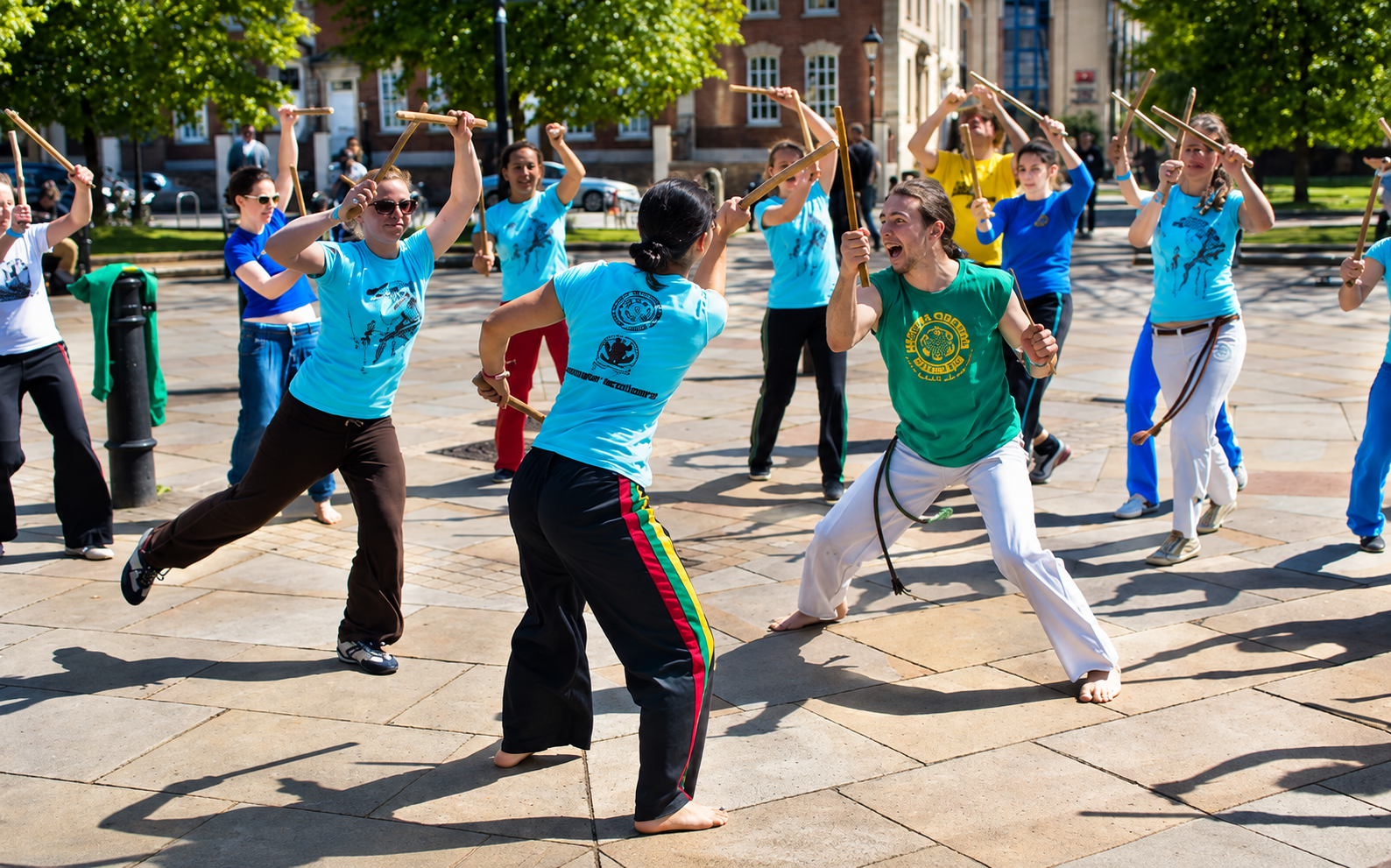
A rhythmic dance commonly performed with pairs of sticks and accompanied by singing and percussion. Its origin stories vary, and it is often encountered alongside capoeira at cultural gatherings and performances.
To find out about learning capoeira locally, explore training in Cardiff or get in touch.
The three images on this page are AI-enhanced recreations, used as illustrations rather than documentary records of Cardiff classes or events.